Duck Confit
-
 6 Ingredients
-
 750 min total
-
 Serves 4
-
 Medium
-
 France
-
Miscellaneous
Recipe byThe ZestyPlate Kitchen
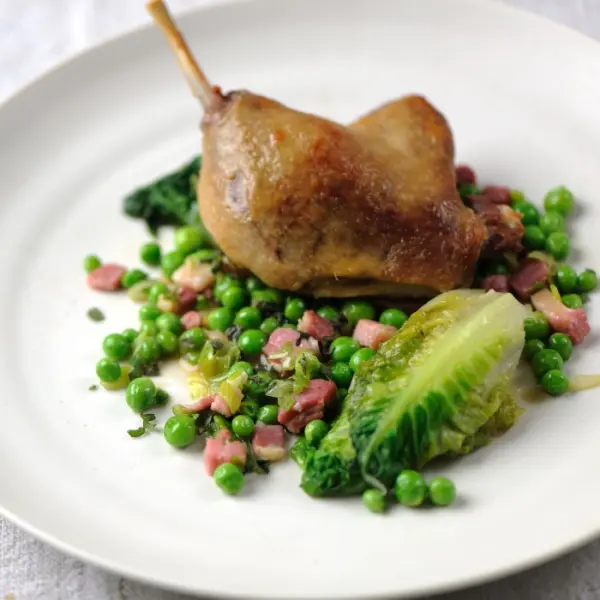
French duck confit: legs salt-cured overnight, slow-cooked in their own fat until meltingly tender, then crisped in the oven before serving.
Duck confit rewards a bit of forward planning more than almost anything else you can cook. The legs sit in salt and herbs overnight, then cook so gently in fat that the meat practically falls away from the bone. Make a batch when you have time and it'll sit happily in the fridge for weeks, ready to crisp up for a dinner that looks far more effort than it is.
Jump to recipe
Prep 15 min
Cook 120 min
Total 750 min
Medium
Scale:
- Handful Sea Salt
- 4 Bay Leaf
- 4 cloves Garlic
- Handful Thyme
- 4 Duck Legs
- 100ml White Wine
Preparation
- The day before, scatter half the salt, half the garlic and half the herbs across the base of a small shallow dish. Sit the duck legs skin-side up on top, cover with the rest of the salt, garlic and herbs, then wrap and chill overnight, or up to two days.
- Pour the wine into a saucepan that holds the legs snugly in one layer. Brush the salt off the legs and lay them skin-side down in the wine. Put the lid on and set over medium heat. The moment the wine bubbles, drop the heat right down and cook for two hours, glancing in now and then to check it's barely ticking over (a heat diffuser helps). By the end the legs should be sitting in their own fat and feel meltingly soft when prodded. Let them cool.
- They're now cooked and ready to eat, or you can crisp them as below. To store, pack them tightly into a container, pour over the fat but leave the watery liquid behind, cover, and keep in the fridge for up to a month or freeze for up to three months. That leftover liquid makes a good gravy.
- To reheat and crisp, heat the oven to 220C/fan 200C/gas 7. Lift the legs from the fat, sit them skin-side down in an ovenproof frying pan, and roast for 30 to 40 minutes, turning halfway, until brown and crisp. Serve with the warmed gravy, a crisp salad and golden potatoes.
Tips from the ZestyPlate Kitchen
- Salt the legs the night before with the garlic and herbs so the seasoning reaches the centre and the flesh firms up.
- Wipe the cure off before cooking, otherwise the finished confit can turn out far too salty.
- Hold the cooking at the gentlest possible simmer; that slow, low heat is the whole secret to tenderness.
- Blast the skin in a hot oven just before serving so you get crisp against soft.
Frequently Asked Questions
Sealed under its own fat in the fridge, around a month. That fat seal is the traditional way of preserving it, and the legs freeze well too.
Not for this version. The legs cook gently in wine and release enough of their own fat to cover themselves. The old-school method submerges them fully in duck fat.
Crisp roast potatoes, a sharp green salad, and a quick gravy made from the cooking juices.
Save this recipe, join ZestyPlate free
- Save your favourite recipes
- Build your own cookbooks
- Track what you've cooked
- New recipes in your inbox
Create free account
Already a member? Log in
Ratings & Reviews
Log in or create an account to rate this recipe.
No reviews yet, be the first to rate this recipe!



Comments (0)
Log in or create an account to join the conversation.
No comments yet, start the conversation!