Dutch poffertjes (mini pancakes)
-
 8 Ingredients
-
 75 min total
-
 Serves Serves 4
-
 Medium
-
 Netherlands
-
Breakfast
Recipe byThe ZestyPlate Kitchen
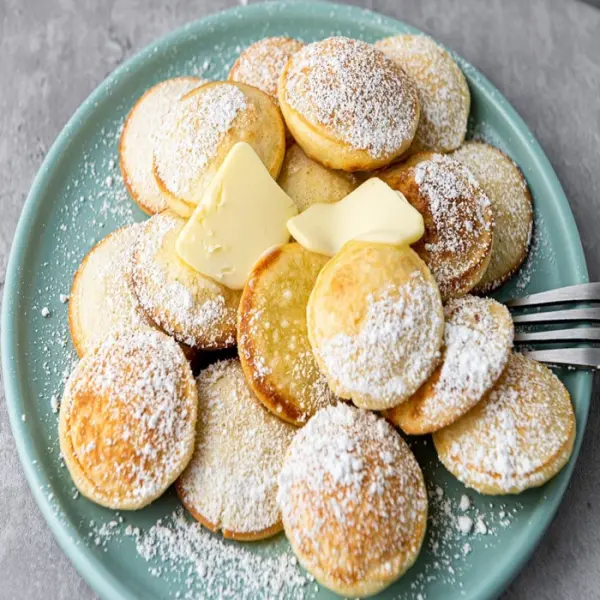
Dutch poffertjes: fluffy, bite-sized buckwheat pancakes cooked in a dimpled pan, served warm with a knob of butter and a snowfall of icing sugar.
Poffertjes are little Dutch pancakes with a soft, almost custardy middle, thanks to a yeasted batter flecked with buckwheat. They turn up piled high under melting butter and a heavy dusting of icing sugar at markets across the Netherlands, and they're well within reach at home. Be warned: they're impossibly poppable, so make far more than seems sensible.
Jump to recipe
Prep 55 min
Cook 20 min
Total 75 min
Medium
Scale:
- 125g Flour
- 125g Buckwheat Flour
- 2 Eggs
- 300ml Milk
- 10g Yeast
- 1tsp Vanilla Sugar
- To serve Butter
- To serve Icing Sugar
Nutrition (per serving)
315
kcal
14g
Protein
52g
Carbs
6g
Fat
Estimated per serving. How we calculate this.
Preparation
- Stir the dried yeast into a little of the lukewarm milk until it dissolves.
- Put the buckwheat flour and plain flour in a bowl, make a small well in the centre, and pour in the yeast mixture. Add the rest of the milk and stir to a smooth batter.
- Mix in the eggs, salt and vanilla sugar, then leave to rise for about 45 minutes.
- Heat a poffertjes pan and drop a little butter into each hollow. Fill each one halfway with batter and cook until the tops dry out a little, then turn with a small fork and cook the other side until golden brown.
- Serve with butter and icing sugar.
Tips from the ZestyPlate Kitchen
- A proper poffertjes pan with its dimples gives the classic round shape, but a takoyaki pan or even egg-poaching rings will see you through.
- Fill each hollow only halfway, as the yeasted batter rises a good deal while it cooks.
- Hold off turning until the tops look dry and matte; flip too soon and they tear.
- Get them to the table straight away while hot, since they lose their charm once they cool and firm up.
Frequently Asked Questions
It brings a gently nutty, earthy note that's part of what makes a poffertje a poffertje. Plain flour alone works, but you lose that distinctive flavour.
Yes. Because it's yeast-raised, you can mix it and let it rise slowly in the fridge for a few hours. Bring it back to room temperature before cooking.
Work your way along the pan with a thin skewer or small fork, flipping each one as its top sets. After a few you'll fall into a rhythm.
The yeast either didn't get going or the batter didn't prove for long enough. Make sure the milk is only just lukewarm and give it the full rising time.
Save this recipe, join ZestyPlate free
- Save your favourite recipes
- Build your own cookbooks
- Track what you've cooked
- New recipes in your inbox
Create free account
Already a member? Log in
Ratings & Reviews
Log in or create an account to rate this recipe.
No reviews yet, be the first to rate this recipe!
Comments (0)
Log in or create an account to join the conversation.
No comments yet, start the conversation!